






Artificial Intelligence (AI) is transforming agriculture by making farming smarter, more efficient, and more sustainable. With the global demand for food increasing and natural resources under pressure, AI helps farmers produce more while using less.
🚜 Precision Farming
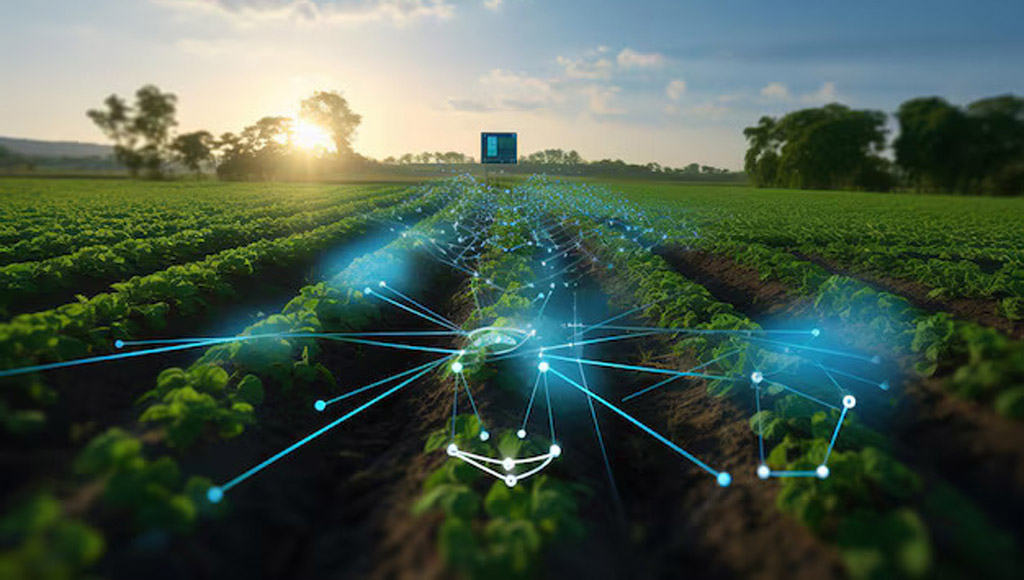
AI-powered systems analyze data from satellites, drones, sensors, and weather stations to monitor crop health in real time. Farmers can detect pest attacks, nutrient deficiencies, or water stress early and take targeted action—reducing waste and increasing yield.
🌱 Smart Irrigation & Resource Management
Machine-learning models predict soil moisture levels and weather patterns to optimize irrigation schedules. This ensures crops receive the right amount of water at the right time, conserving water and lowering costs.
🧠 Predictive Analytics for Better Decisions
AI tools can forecast crop yields, market demand, and price trends. These insights help farmers decide what to plant, when to harvest, and how to price their produce, reducing financial risk.
🤖 Automation & Robotics
Autonomous tractors, robotic harvesters, and AI-driven weed control systems are reducing dependency on manual labor. These technologies increase speed, accuracy, and productivity—especially valuable in regions facing labor shortages.
🌍 Sustainable Farming
By minimizing the overuse of fertilizers, pesticides, and water, AI supports environmentally friendly farming practices. This leads to healthier soil, lower emissions, and long-term agricultural sustainability.
🌟 The Future of AI in Agriculture
As AI continues to evolve, its integration with IoT, robotics, and big data will further revolutionize farming—making agriculture more resilient, profitable, and climate-smart.